
Learning From The Masters
Pearls of wisdom.

I have been fortunate, for most of my career, to work with many of the acknowledged masters of our trade. In every case, I have tried to learn about music, about how to serve it, and eventually about how to live and how life works. And in other cases, when I was working with other players who were not necessarily masters, many of them were nonetheless very knowledgeable and often had great things to pass on to me. I’m glad that I have been surrounded by such people, but I’m also grateful that I chose, on most occasions, to listen to and consider their advice.
In some cases, it came as a compliment or as a form of encouragement. In other cases, it was not so pleasant. At times it was criticism, at times it was frustration, or in fact, even a scolding. Be that as it may, I tried to take it all in and learn something from each person I worked with, assuming I felt they were sincere and that their comments were aimed at helping the music and improving me as a musician. I figured that if anybody had anything to say to me, they wouldn’t have bothered if they thought I didn’t have any potential.
A musician’s most valuable instrument.
If I did anything right during my career, it was to at least listen to my elders, to the masters, and to other knowledgeable musicians when they made comments to me that either helped my musical growth, made me look inside, or possibly caused me some period of contemplation and even a change in my direction.
These “pearls of wisdom,” as I call them, are things that I think are worth passing on. The reader can take them for what they’re worth, but in most cases, they meant a great deal to me and helped me become the best musician that I can possibly be. Here are a few that came to mind at random, which I hope resonate with you.
Al Haig: “I like playing with drums, but in this establishment, we cannot have drums because of the New York City cabaret laws. I really miss the drums in that case, so you need to understand that when there’s a piano-and-bass duo, the bass player is the drummer. I’m relying on you for the beat.”
James Moody: “If you don’t practice one day, you’ll know it. If you don’t practice for two days, your friends will know it. If you don’t practice for three days, everyone will know it.”
Terry Gibbs: “If you want more solos, get your own band. If you want to solidify your reputation and become highly respected in this business, you will do so by making the bandleader sound good.”
Al Haig: “I played with Charlie Parker when I was sixteen years old, and my career has gone steadily downhill ever since.”
Wayne Shorter: “You have a rather brown sound.” Wayne was known for speaking in fairly cryptic terms, but he always intended to convey some meaning through his way of speaking. I thought about that one for a long time and concluded that he was simply saying I might want to reexamine the sound I was getting from my instrument, evaluate it, and see if it needed any polishing. I thought about the color spectrum, and I thought, “What sort of sound do I really want to have? What sort of color would represent that sound?” And I immediately thought of soft, more positive colors. Brown, to me, had somewhat of a negative connotation. Although I did want a dark sound, I wanted one that would be brilliant, one that would inspire. Colors like gold, bright blue, and brilliant colors were more of what I felt I was after at the time. Because of that cryptic comment, I really started working on refining my sound and creating one that inspired others and could easily identify me as me.
Ron Carter: “If you can’t play it perfectly six times in a row, you must stop and go back to number one and work up to playing six in a row perfectly. It’s the six out of six rule.”
Harry “Sweets” Edison: “As long as you and I play together and think alike, we’ll be able to ignore this unqualified drummer. Let’s stick with each other, and everything will work out.”
James Moody: “There is no such thing as black and white in people. A belt is black. I’ve never seen a human that color. Snow is white. I’ve never seen a human that color either.”
Clark Terry: “When I’m soloing, and I leave periods of silence, you are playing my solo for me.”
Ron Carter: “Your bass sounds beautiful. That’s because of what you’re putting into it.”
David Baker: “Keep on keepin’ on!”
Horace Silver: “Every note has a life of its own.”
Joe Williams: “Never let down.”
Jimmy Raney: You are tired? When you die, you can get all the sleep you want.
James Moody: “Show me that. How do you do that? I need to practice.”
Lou Donaldson: “If it ain’t got the blues in it, it ain’t jazz.”
Gerry Mulligan: “You musicians are all alike.”
Horace Silver: “It’s gotta have a groove. If there ain’t no groove, it’s dead.”
Benny Goodman: When a pianist, a drummer, and I were invited to come to his house for what was billed as a small get-together, jam session, that was an audition in disguise. After playing a couple of tunes, Benny looked at us and said, “You boys don’t know these tunes, do you?” And we all just sort of looked down at the floor. After a period of silence, he said, “That will be all, boys. Move along.” After that, I decided I needed to learn those tunes so I would know them if they ever came up in another setting. Lo and behold, nine months later, Benny Goodman hired me, and I was in his band for a little over a year.
James Moody: “I don’t see…But I see.”
Ron Carter: “Ninety percent of the money is made on ten percent of the fingerboard.”
Art Farmer: “Can’t you hear that your low A flat is always out of tune? Pay attention to the details.”
David Baker: “Todd, I’ve been watching your career for years. I can honestly say that it gives me great joy, and I’m immensely proud of you and your achievements.”
Sam Jones: “We have a choice to make. We can go home now and practice together, or we can take that bass player outside and beat him up.”
Rufus Reid: “Your sound is the first thing people hear. They will decide then if they want to listen to you or not.”
Billy Hart: “What’s the matter, man? Don’t you trust me?”
Jerry Coker: Don’t go into double-time on a ballad.
Mel Lewis: “You are a fine player. I’m not sure you’re ready for this band just yet, but you will be.” Some months later, he invited me back in, and we started playing together once again.
Rufus Reid: “Hang in there, Todd. Your time will come.”
Dexter Gordon: “I like your sound, and I like your beat even more.”
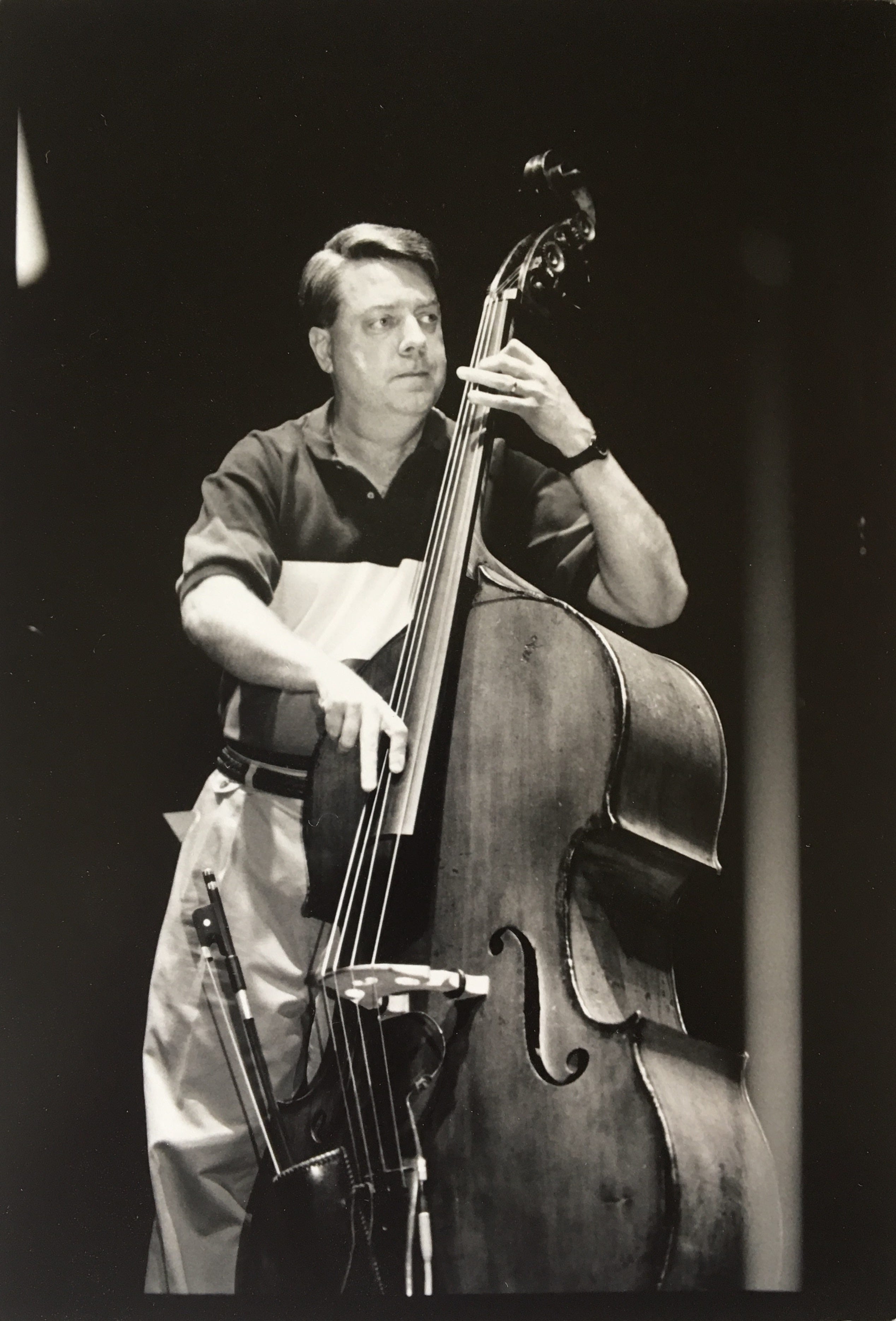
The young apprentice.
These are but a few nuggets that come to mind today. One of the great rewards of playing music is that there is no limit to what one can learn, and there is no end to that process.
I’ll leave it here. It’s time to practice.
TC
Hi Dr Coolman!
Thank you for sharing those quotes from the Masters you learned from and played with! They all help me to think about what I continue to do on the bass!
Also, I have many pictures from a Skidmore Jazz Institute Lunch Outing we attended at Don McCormick's house back in 1994 or 1996. They are some great memories. You are in them as well as Milt and Mona, Ed Shaungnessy and other faculty members and students.
I will never forget your words of wisdom you gave to me one day in the faculty housing about whether or not to take the USAF Band Audition. It went something like this: "Kurt, you're a good bass player...but know this, if you go down the classical bass path...those players practice 6-8 hours a day and when they go to those auditions, they just hope their playing is "on" that day. If it is not and they don't get the gig, they go back and do it all over again until the next audition."
In the moment and in that context, I believe you were encouraging me to take the audition with the USAF Band, which I did. It was very good and solid advice. I got that gig, learned a lot, toured the country and lived in Japan for 3 months while I was in! I have military benefits that I use to this day. The GI Bill helped me to go to North Texas and get that MM in Jazz Studies!
Your words resonated with me in the 1990's and I will always be appreciative how you helped me when I was a young bass player trying to find my way in music. You made a big impact on my life back then. Thank you for that, I am most grateful our paths crossed when they did!
Your friend,
Kurt
Dreaming of the Masters..